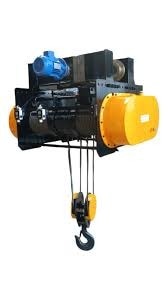
Electric Wire Rope Hoist
Description
Electric Wire Rope Hoist Manufacturer in Ahmedabad, Gujarat – Balaji Crane Private Limited
Electric Wire Rope Hoist for Industrial Lifting and Material Handling
Balaji Crane Private Limited offers industrial crane and material handling solutions for businesses requiring efficient lifting and lowering of heavy loads. An Electric Wire Rope Hoist is an essential lifting component used in EOT cranes, gantry cranes, JIB cranes, industrial workshops, manufacturing plants, warehouses, and fabrication units.
An electric wire rope hoist uses an electrically powered motor, wire rope, drum, and lifting mechanism to raise and lower loads in a controlled manner. Depending on the application, the hoist can be selected according to the required lifting capacity, lifting height, hoisting speed, duty classification, and installation arrangement.
Electric wire rope hoists help improve material handling efficiency, reduce manual lifting, and support repetitive industrial lifting operations. Balaji Crane Private Limited can be approached to discuss electric wire rope hoist requirements for industrial applications in Ahmedabad, Gujarat, and other locations according to project scope.
What Is an Electric Wire Rope Hoist?
11
An Electric Wire Rope Hoist is a motorized lifting device designed to lift and lower heavy materials using a steel wire rope wound around a drum. It is commonly installed on overhead travelling cranes, gantry cranes, JIB cranes, and other compatible lifting systems.
The hoist generally consists of an electric motor, gearbox, rope drum, steel wire rope, lifting hook, braking system, and electrical controls. Depending on the design, it may be installed as a fixed hoist or integrated with a trolley for horizontal movement along a crane beam.
Electric wire rope hoists are widely used in industrial environments where reliable lifting performance, controlled load positioning, and regular material movement are required.
Main Components of an Electric Wire Rope Hoist
1. Electric Motor
Supplies the power required to lift and lower loads. Motor selection depends on rated load, hoisting speed, duty cycle, and operating conditions.
2. Wire Rope and Rope Drum
The steel wire rope carries the suspended load, while the drum winds and unwinds the rope during hoisting and lowering.
3. Gearbox
Transmits motor power through a suitable gear reduction arrangement to provide the torque needed for lifting.
4. Lifting Hook and Hook Block
Connects the load to the hoist through an appropriate lifting attachment. Hook capacity and condition must be suitable for the intended load.
5. Braking and Control System
Supports controlled operation and load holding. Limit switches and other protective devices are selected according to the hoist design and applicable safety requirements.
Types of Electric Wire Rope Hoists
1. Fixed Electric Wire Rope Hoist
A fixed hoist is installed at a designated lifting position and is suitable when loads need to be raised or lowered without the hoist travelling horizontally.
Applications: Maintenance stations, fixed loading points, and dedicated lifting areas.
2. Trolley-Mounted Electric Wire Rope Hoist
A trolley-mounted hoist travels along a compatible crane beam, allowing the load to move horizontally as well as vertically.
Applications: EOT cranes, gantry cranes, workshops, warehouses, and production facilities.
3. Single-Girder Hoist Arrangement
This arrangement is used with suitable single-girder overhead or gantry crane designs. The hoist and trolley configuration must match the beam, rated load, available headroom, and required hook travel.
Applications: General industrial material handling and production operations.
4. Double-Girder Hoist Arrangement
A double-girder crane can accommodate an appropriately engineered hoist and trolley arrangement, often providing flexibility for demanding lifting applications and hook-height requirements.
Applications: Heavy engineering, steel fabrication, industrial plants, and heavy-duty material handling.
5. Low-Headroom Electric Wire Rope Hoist
A low-headroom configuration is designed to reduce the space needed between the supporting structure and the lifting hook. It is useful where building height or crane clearance is limited.
Applications: Facilities with restricted headroom and specialized crane installations.
Technical Specifications of Electric Wire Rope Hoists
The following are the main technical parameters to evaluate when selecting an electric wire rope hoist. Actual values depend on the model and project requirements.
Technical Parameter Specification / Selection Criteria
Hoist Type Fixed, trolley-mounted, or low-headroom configuration
Safe Working Load (SWL) Selected according to the required rated lifting capacity
Lifting Height Based on required hook travel and available clearance
Hoisting Speed Standard or variable speed, depending on the design
Hoisting Motor Selected according to load, speed, and duty
Power Supply Finalized according to the motor and site electrical system
Wire Rope Selected according to rated load, rope construction, and reeving arrangement
Rope Drum Designed for the specified rope diameter and required rope travel
Trolley Type Manual or powered, as appropriate to the application
Control System Pendant, radio remote, or compatible control arrangement
Braking System Suitable service and load-holding brake arrangement
Duty Classification Selected according to operating frequency and service intensity
Safety Devices Appropriate limit switches and protective devices
Mounting Arrangement Fixed mounting or compatible crane beam/trolley system
Important: Rated capacity, motor power, rope diameter, lifting speed, and duty classification must be confirmed from the manufacturer's technical documentation and the specific hoist configuration. Do not select a hoist on capacity alone.
Working Principle of an Electric Wire Rope Hoist
An electric wire rope hoist operates through a coordinated motor, gearbox, drum, wire rope, and braking system.
1. Power Activation: The operator activates the hoist using its approved control system.
2. Motor Operation: The electric motor produces rotational power for the lifting mechanism.
3. Gear Reduction: The gearbox transmits the required torque to the rope drum.
4. Rope Movement: The drum winds or unwinds the steel wire rope to raise or lower the load.
5. Load Control: The braking system helps control movement and hold the load when operation stops.
6. Limit Protection: Suitable limit switches and other protective devices help prevent travel beyond specified operating limits.
When integrated with a trolley, the hoist can also move horizontally along the crane beam. Operators must follow the manufacturer's instructions and avoid overloading, side pulling, and lifting loads above personnel.
Applications of Electric Wire Rope Hoists
Electric wire rope hoists are used in many industrial sectors, including:
- Manufacturing Plants: Lifting machine components, raw materials, and finished products.
- Steel Fabrication Units: Handling fabricated structures, steel sections, and heavy components.
- Engineering Workshops: Supporting equipment installation, servicing, and maintenance.
- Warehouses: Moving heavy goods between loading, storage, and dispatch areas.
- Automobile Industries: Handling assemblies, engines, and industrial components.
- Construction Projects: Lifting materials with appropriately designed crane systems.
- Power and Infrastructure Facilities: Handling selected equipment and machinery.
- Foundries and Heavy Industries: Moving materials using hoists specifically suited to the operating environment.
- EOT and Gantry Cranes: Providing the vertical lifting function within a larger crane system.
- JIB Crane Installations: Supporting localized lifting at designated workstations.
Benefits of Electric Wire Rope Hoists
1. Efficient Heavy Load Handling
Electric wire rope hoists help lift and lower loads without relying on manual lifting, improving material handling efficiency.
2. Controlled Lifting Operations
A suitable motor, braking system, and control arrangement support controlled load movement within the hoist's rated limits.
3. Integration with Different Crane Systems
Compatible hoists can be used with EOT cranes, gantry cranes, JIB cranes, and other engineered lifting systems.
4. Suitable for Repetitive Industrial Work
The correct hoist duty classification helps match the equipment to the frequency and intensity of lifting operations.
5. Configurable Lifting Height and Speed
Hoisting travel and speed can be selected according to the working environment, load characteristics, and production requirements.
6. Improved Workplace Material Handling
Properly selected and maintained equipment reduces the need for manual handling of heavy components and helps streamline industrial workflows.
Safety and Maintenance of Electric Wire Rope Hoists
Safe operation and regular maintenance are essential for dependable lifting performance.
- Inspect the wire rope for broken wires, wear, corrosion, deformation, and other rejection criteria.
- Check the hook, hook latch, hook block, and lifting attachments before use.
- Inspect the braking system and confirm that the hoist operates as specified.
- Test the relevant limit switches and safety devices according to the manufacturer's instructions.
- Follow the specified lubrication and maintenance schedule.
- Do not exceed the rated capacity or use the hoist for side pulling unless specifically designed for that purpose.
- Keep people clear of suspended loads.
- Arrange periodic inspections and repairs through qualified personnel.
Maintenance intervals and replacement criteria must follow the manufacturer's documentation and applicable safety regulations.
Why Choose Balaji Crane Private Limited?
Balaji Crane Private Limited can be approached for industrial lifting and material handling requirements involving electric wire rope hoists and compatible crane arrangements.
- Assistance in identifying a suitable hoist configuration.
- Consideration of lifting capacity, lifting height, and operating frequency.
- Selection of fixed or trolley-mounted arrangements according to the application.
- Evaluation of headroom, crane compatibility, and control requirements.
- Attention to relevant braking and safety provisions.
For an electric wire rope hoist enquiry, share the required lifting capacity, lifting height, hoisting speed, crane type, available headroom, and expected operating frequency.
Frequently Asked Questions (Q&A) About Electric Wire Rope Hoists
Q1. What is an electric wire rope hoist?
An electric wire rope hoist is a powered lifting device that uses a steel wire rope wound around a drum to raise and lower loads. It is commonly used in factories, warehouses, workshops, and crane installations.
Q2. What is the difference between a wire rope hoist and a chain hoist?
A wire rope hoist uses steel wire rope wound around a drum, while a chain hoist uses a load chain and chain wheel or pocket wheel. The appropriate choice depends on the required capacity, lifting height, duty, speed, headroom, and application.
Q3. Where is an electric wire rope hoist used?
It is used in manufacturing plants, engineering workshops, warehouses, steel fabrication units, automobile industries, and material handling systems incorporating EOT, gantry, or JIB cranes.
Q4. What lifting capacities are available for electric wire rope hoists?
Available capacities depend on the manufacturer's product range and configuration. The selected rated capacity must meet the intended load requirements and applicable safety factors and design provisions.
Q5. Can an electric wire rope hoist be used with an EOT crane?
Yes. A compatible electric wire rope hoist can be integrated into an EOT crane system, provided the hoist, trolley, bridge structure, and electrical controls are designed to work together.